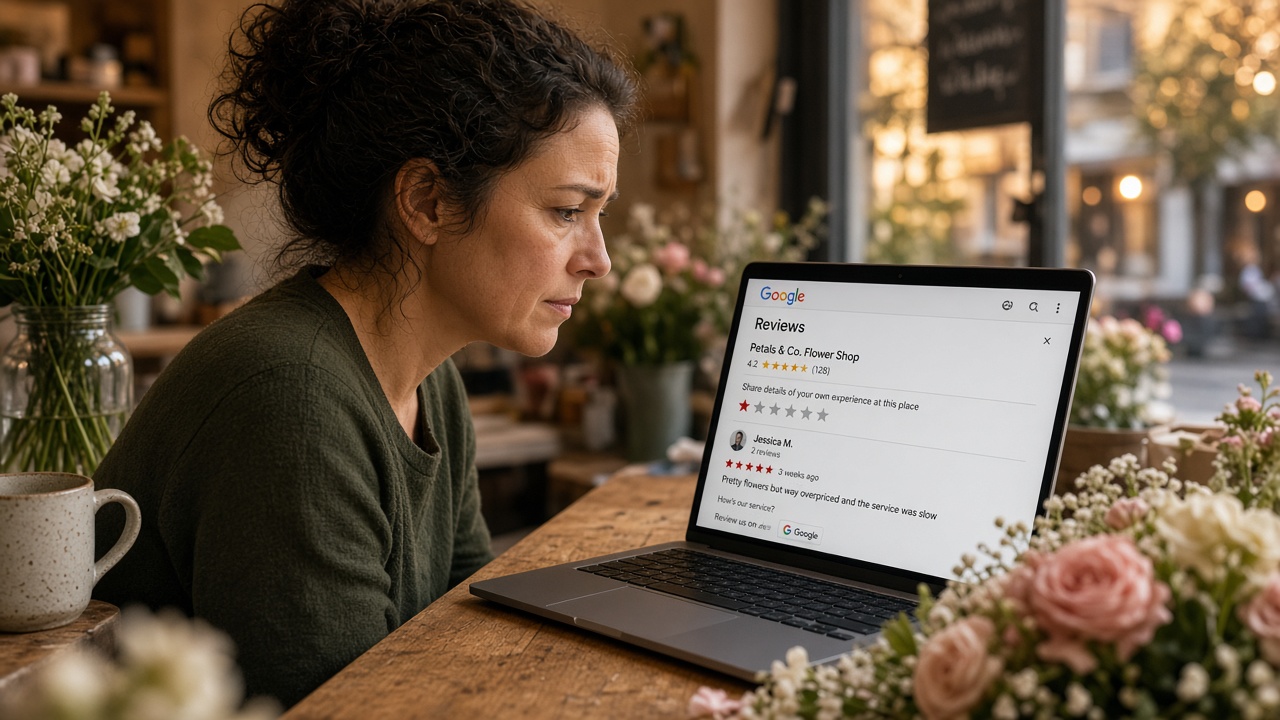
A one-star review showed up on a client’s Google Business Profile at 11pm on a Tuesday. Four sentences, barely any punctuation, and the phrase “never coming back.” By the time she called us the next morning, she’d read it eleven times and drafted three replies she never sent.
That reaction is normal. It’s also the worst possible moment to decide what to do about a bad review. This is the playbook we walk clients through instead: how to tell what kind of review you’re dealing with, what to do about each kind, and when the right move is nothing at all.
First, let the sick feeling pass before you respond
Give it an hour. A day, if you can stand it. Almost every response written in the first ten minutes reads defensive, because it is defensive, and a defensive reply to a public review does more damage than the review itself. Readers deciding whether to trust your business are watching how you handle criticism as much as they’re reading the complaint.
We’ve written before about how much weight a single negative review can carry for a business that doesn’t have many reviews yet. The flip side matters just as much: your response carries weight too, and it’s the one part of this you fully control. The review is what happened to you. The response is what you do about it, in front of an audience.
Sort it before you respond to it: fair, unfair, or fake
Not every bad review deserves the same response, and treating them all the same is how business owners waste a week fighting a battle they were never going to win.
Fair. The service was slow, the order was wrong, the callback never came. If a neutral third party reading it would say “yeah, that’s a legitimate complaint,” it’s fair. These sting the most because they’re true, but they’re also the easiest to resolve well.
Unfair. The facts are real but the conclusion is stretched past what they support. One slow Tuesday becomes “avoid this place entirely.” A price disagreement becomes an accusation of dishonesty. The reviewer had a genuine experience, but the review oversells the damage.
Fake. The reviewer was never a customer. It’s a competitor, an ex-employee with a grudge, or someone who mixed up your business with a similarly named one three towns over. Fake reviews get a different process entirely, and it starts below.
We took over reputation management for a client with several locations a while back, work that’s normally handled by someone else on our team. Doing it by hand for a stretch was its own education. Reading review after review, the same shape of complaint kept showing up: “I’ve been coming here for two years and never had a problem until today,” followed by an account of one grumpy interaction with one employee on one bad day. Two years of good service, erased by a single write-up, because that’s the one moment that got typed into a phone at 11pm.
Responding to a fair review
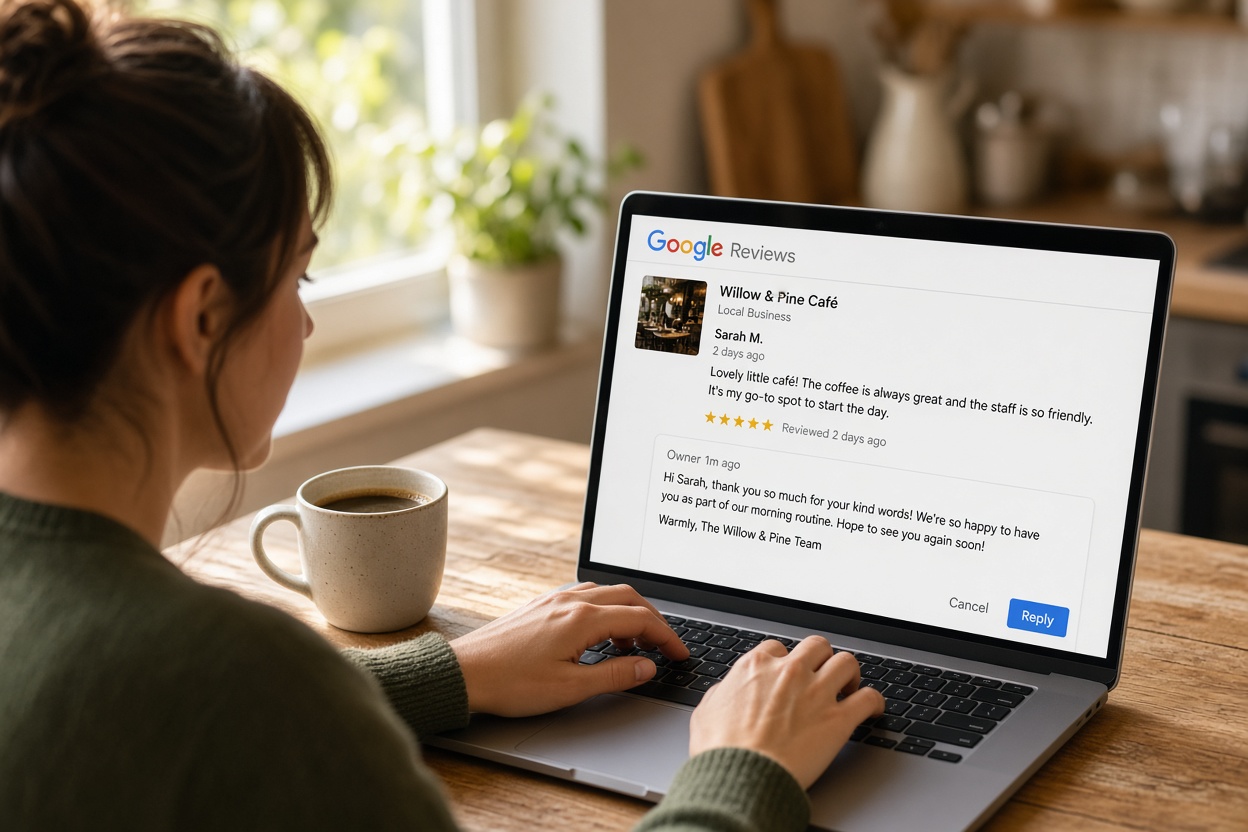
Acknowledge the specific thing that went wrong. Not “we’re sorry you feel that way,” which every reader recognizes as a non-apology, but the actual failure: the order was wrong, the wait ran long, the call wasn’t returned. Say what you’re doing about it. If it’s already fixed, say so.
Keep the public reply to three or four sentences, then invite them to call or email to make it right. A long public response reads like you’re arguing with a paying customer in front of everyone else who might become one. Save the detail and the back-and-forth for the phone call, where a real fix can happen instead of a public performance of one.
If they update or remove the review after you’ve made it right, good. If they don’t, that’s fine too. You weren’t responding for them. You were responding for the next fifty people who read it before deciding whether to call you.
Getting a fake review removed: the actual process
Google, Yelp, and the other platforms all have a flagging process for reviews that violate their policies: reviews from someone who was never a customer, reviews that are really about a different business, reviews built on harassment or spam rather than an experience. You flag it, explain in plain terms which policy it violates, and wait.
Here’s the part that doesn’t get said enough: it isn’t fast and it isn’t guaranteed. Platforms lean toward leaving reviews up, because removing reviews on request is exactly what a dishonest business would want them to do freely. We don’t have a clean success rate to hand you here, and we’d rather say that than make one up. What we can tell you from doing this repeatedly is that a flagged review with a specific, factual explanation of the violation does noticeably better than a vague “this is fake” flag, and that persistence over weeks beats a single attempt.
Screenshot the review before you flag it. Platforms edit, reviewers delete and repost, and you want your own record of exactly what was said and when, especially if you end up needing it for a second appeal or a conversation with the platform’s support team.
While you wait, don’t escalate publicly. Arguing with a fake review in the comments gives it more visibility and makes your business look thin-skinned to everyone else reading it, even the people who’d otherwise assume the review was nonsense on sight.
Build enough real reviews that one bad one can’t move the needle
The businesses that get wrecked by a single bad review are almost always the ones with only a handful of reviews total. Five reviews and one is negative, and your rating drops to a number that scares people off before they even read what happened. Two hundred reviews and one is negative, and it barely moves the average. It also looks more honest: nobody fully trusts a business with a perfect five-star record and eleven reviews total.
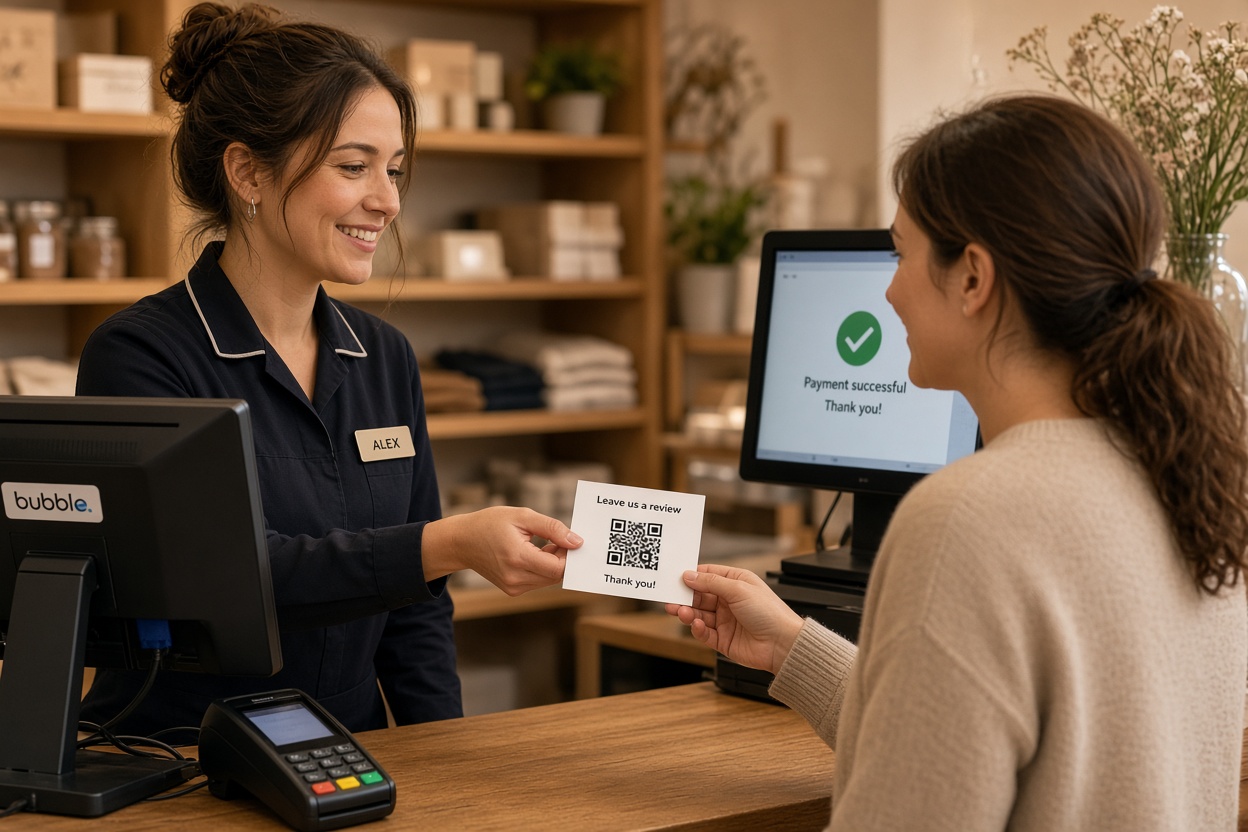
The fix isn’t complicated, just consistently neglected. Ask satisfied customers directly, right after a good interaction, with a link that takes two taps to use. A text message sent an hour after a good appointment gets more responses than an email sent the next week, because the good feeling is still fresh and the ask takes ten seconds.
Most people who’d happily leave a good review never do, simply because nobody asked them at the moment they were feeling good about the experience. Don’t wait for reviews to trickle in on their own. Build the ask into how you close out every job, every order, every appointment, the same way you’d build in a follow-up call.
This also matters for how customers find you in the first place. Review volume and recency are part of how local search results decide who shows up first when someone nearby searches for what you do, which means the review-request habit is doing double duty: protecting your rating and helping you get found.
When the bad review is right
Sometimes a pattern shows up. The same complaint from three different reviewers over two months isn’t three unlucky days, it’s a real problem in the business. This is the review that’s easiest to dismiss and most costly to ignore, because the instinct is to defend against criticism rather than sit with it and ask whether it’s true.
If the same thing comes up twice, from two different customers who don’t know each other, that’s worth fixing before a third one shows up in public and does the fixing for you, in a much more expensive way.
Review extortion: what it looks like and what to do
This one catches business owners off guard because it doesn’t look like a normal review dispute at first. Someone leaves a one-star review, then reaches out separately offering to take it down in exchange for a discount, a free service, or straight cash. Sometimes it’s dressed up as a misunderstanding they’d be happy to resolve, if you just make it worth their while.
Don’t pay it. Paying confirms the review was leverage rather than feedback, and it tells that person, and anyone they talk to, that your business is an easy mark for the next one who tries it.
Document the message with a screenshot, including the date and time. Report it to the platform as a policy violation; most platforms treat review extortion as a distinct, serious violation and act faster on it than on a routine dispute. Then respond to the original review the same honest way you’d respond to any other: address what’s true, correct what isn’t, and let readers judge the extortion attempt on their own once the facts are laid out. You don’t need to accuse anyone of extortion in the public reply. Just tell the truth about what happened, and let the pattern speak for itself.
What to type, sentence by sentence
Business owners freeze up less over the strategy than over the blank reply box. Here’s a structure that works for a fair review without sounding like a form letter:
- Name what happened, specifically. “You waited 40 minutes for your food” beats “we’re sorry for the wait.”
- Own it in one sentence, without qualifiers. Not “unfortunately, sometimes this happens,” just “that’s on us.”
- State the fix, if there is one. “We’ve added a second cook to the Friday dinner shift” is worth more than “we’re working on it,” if it’s true.
- Invite them offline. A phone number or an email, so the resolution can happen somewhere other than the review section.
For an unfair review, the move is different. You’re not apologizing for something you didn’t do. You’re adding the missing context, briefly, without arguing. “We looked into this and found the part was on backorder through our supplier, which we should have communicated sooner. We’ve since started proactively calling customers when a part is delayed.” That response doesn’t dispute the reviewer’s frustration. It corrects the record for the next reader without calling the reviewer a liar.
The mistake most owners make: waiting for the “big” review to build a system
Most businesses don’t have a review process until a bad one forces them to think about it. By then they’re reacting instead of building. The businesses that weather a bad review well are the ones that already had two hundred good ones sitting there before the bad one landed, not the ones that scrambled to get reviews after the damage.
If you’re reading this because a bad review just landed and you have twelve reviews total, handle the review using the steps above, then spend the next month building the review habit into every closed job. The next bad review, and there will be one eventually, will land in a very different context.
The bigger picture
None of this is about chasing a perfect five stars. It’s about not letting one bad night define a business that’s earned better than that, while still taking the fair complaints seriously enough to fix what’s broken. A steady stream of real reviews, a calm response process, and knowing which fights are worth having gets a business there faster than panicking over each new notification.
If you’re not sure where your reviews stand right now, or you want a second set of eyes on how your business looks across Google, Yelp, and the rest, get in touch and we’ll walk through a reputation audit with you.
